
Table of Contents
Credits
Host: Sara Dong
Guest: Adam Ratner
Written, edited and produced by Sara Dong with support from the Infectious Diseases Society of America (IDSA)
Our Guests
Adam Ratner, MD, MPH

Adam Ratner, MD, MPH, is a professor of pediatrics and microbiology at NYU Grossman School of Medicine and the director of the Division of Pediatric Infectious Diseases at Hassenfeld Children’s Hospital and Bellevue Hospital Center. In addition to practicing medicine, Dr. Ratner directs an active research group and teaches students, residents, and other trainees. He speaks widely in both academic settings and news outlets on topics relevant to vaccination and infections in childhood. His work has appeared in The New England Journal of Medicine, PNAS, Pediatrics, and other venues. He edits a major textbook of pediatric infectious diseases, has chaired grant review panels for the National Institutes of Health, and serves on numerous advisory and editorial boards.
He joined Febrile to share his own opinions, not those of his institutions
Check out his book! Booster Shots: The Urgent Lessons of Measles and the Uncertain Future of Children’s Health
Culture
Everything is TB by John Green
He also enjoys taking his dog for walks!
Consult Notes
Consult Q
Assistance in work-up
Case Summary
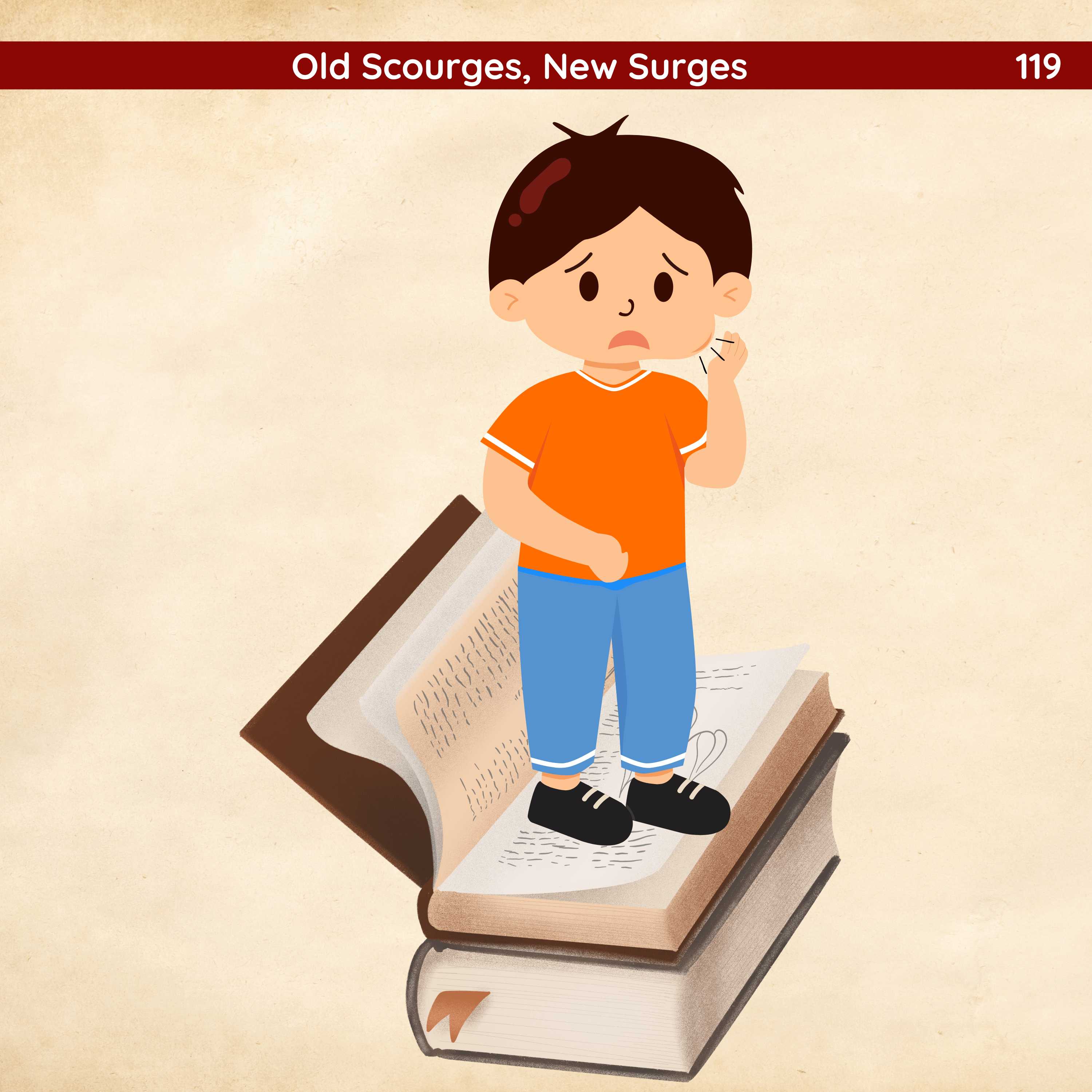
9 year old previously healthy partially immunized boy who presented with facial swelling concerning for acute parotitis and possible mumps infection. Final diagnosis was acute EBV infection.
Key Points
Mumps 101 - Clinical manifestations and management
- Mumps is a systemic disease typically characterized by pain and swelling of one or more salivary glands (usually the parotid glands)
- Nonspecific symptoms may present first such as fever, myalgia, anorexia, malaise, and headache
- About 1 in 5 infections in unvaccinated people may be asymptomatic
- Parotitis occurs in 95% of symptomatic individuals and may be unilateral (involvement of contralateral parotid gland occurs in 70% of cases)
- Occurs most commonly among children between two and nine years old
- This parotid swelling can last up to 10 days
- Orchitis is the most frequently reported postpubertal complication
- Occurs among postpubertal males in 15-30% of cases, typically 5-10 days after onset of parotitis
- Other complications of infection include:
- Cerebrospinal fluid pleocytosis (present in >50% of people with mumps but fewer than 1% have symptoms of viral meningitis)
- Oophoritis
- Pancreatitis
- Encephalitis
- Hearing loss
- Arthritis
- Myocardial involvement
- And others
- Treatment is supportive. Mumps is usually self-limited with most individuals recovering completely within a few weeks
- Check out the chapter in the AAP Red Book on Mumps, DOI: https://doi.org/10.1542/9781610027373-S3_012_009
Mumps Epidemiology
- Occurs worldwide
- Peak incidence is usually late winter to early spring (although sporadic outbreaks can occur at any time of year)
- Humans are the only known natural hosts
- Virus is spread by contact with infectious respiratory tract secretions and saliva
- Incubation period is ~16-18 days from exposure to onset of symptoms
Mumps Diagnostic Testing
- Mumps can be diagnosed by detection of mumps virus nucleic acid (NAAT) in buccal swab specimens (Stenson duct exudate, collected by massaging gland 30 seconds prior to swab collection)), throat or oral swab specimens, urine, or cerebrospinal fluid
- Mumps NAAT is highly sensitive and specific —> preferred test for confirmation of infection
- Testing for mumps-specific IgM, IgG seroconversion, or a significant increase between acute and convalescent IgG titer can also help with diagnosis —> but serology cannot confirm diagnosis of mumps
- In previously vaccinated patients who acquire mumps, the IgM response may be transient, delayed, or not detected
- A negative IgM in person with clinically compatible syndrome does not rule out mumps
Adam and Sara discussed a few aspects of discussions with patients and parents regarding vaccines
- Some resources to help combat vaccine misinformation and address vaccine hesitancy:
- PIDS Comprehensive Vaccine Education Program (CVEP)
- The Vaccine Handbook: A Practical Guide for Clinicians (“The Purple Book”)
Sara shared an update on most recent USA measles cases and outbreaks as of May 11, 2025.
Measles data from 2025 is available at CDC webpage as well as some individual state health department webpages
Infographics
Goal
Listeners will be able to understand the clinical presentation of mumps infection and consider how to contribute to improving vaccine confidence
Learning Objectives
After listening to this episode, listeners will be able to:
- Create a list of the infections on the differential of acute parotitis
- Describe the clinical presentation and possible complications of mumps infection
- Identify potential ways to address common misconceptions about vaccines
Disclosures
Our guest Adam Ratner as well as Febrile podcast and hosts report no relevant financial disclosures
Citation
Ratner, A., Dong, S. “#119: Old Scourges, New Surgers”. Febrile: A Cultured Podcast. https://player.captivate.fm/episode/9a6da0e3-87f4-4ad1-928c-f40c42e8a30e/